

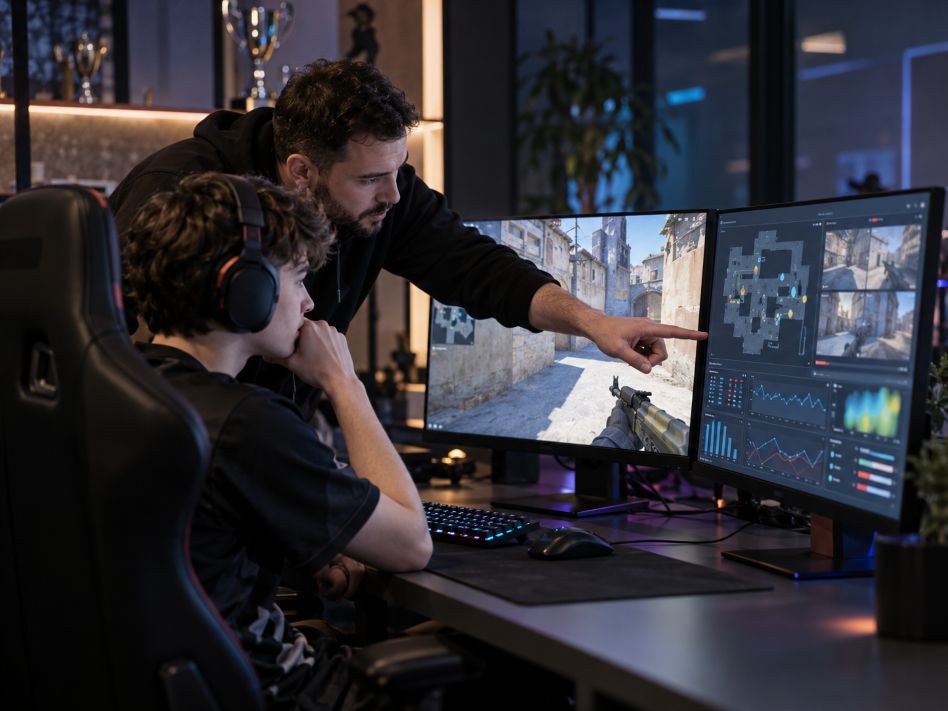
Competitive gaming ratings reflect match results, but a higher rating does not always mean a player has developed stronger skills. In Counter-Strike 2 (CS2), improvement can involve better aim, positioning, communication, and decision-making. Ranking systems capture competitive outcomes, while coaching and performance analytics provide different ways to understand how those results happen.
Players exploring competitive improvement may encounter coaching programs, statistical dashboards, and services such as CS2 FACEIT boosting. These options serve different purposes. Some explain mistakes and identify weaknesses, while others focus on achieving specific ranking outcomes. Understanding those differences helps players judge what each service can realistically provide.
Coaching Feedback: Understanding Why Decisions Work
Coaching focuses on identifying habits that influence performance. A coach may review recorded matches, observe communication, or explain why a particular decision created an advantage or disadvantage.
For CS2 players, feedback might cover crosshair placement, movement, utility usage, positioning, and teamwork. Rather than concentrating entirely on wins, coaching examines how decisions affect individual rounds.
Research published in Frontiers in Psychology emphasizes the importance of purposeful practice and actionable feedback in esports development. Effective training benefits from clear objectives, repeated opportunities to practice, and adjustments based on performance. The research also highlights the need for more evidence about effective esports coaching methods.
Where Coaching Falls Short
Coaching quality can vary considerably. Some instructors provide detailed explanations and measurable objectives. Others may offer general advice without explaining how players should apply it.
A study published in Entertainment Computing, based on interviews with professional League of Legends coaches, identified challenges involving training practices, player attitudes, and the lack of established coaching standards.
Coaching also requires participation. Players must practice recommended changes before meaningful results can emerge. Even useful advice cannot guarantee immediate ranking improvements.
Match Analytics: What Numbers Reveal and What They Miss
Analytics tools approach improvement through recorded performance data. They organize match results into measurable categories, helping players identify patterns that may be difficult to notice during gameplay.
FACEIT provides a tracking system that includes Elo history, match records, map performance, damage statistics, and clutch information. These measurements help users compare performance across matches and identify areas requiring attention.
Common analytical measures include:
- Kill-death ratios, which summarize eliminations relative to deaths.
- Damage statistics, which indicate contributions to engagements.
- Map win rates, which reveal differences across competitive environments.
- Clutch results, which track outcomes in disadvantaged situations.
- Rating changes, which summarize competitive progress over time.
Each metric offers useful information, but interpretation matters. A strong kill-death ratio does not automatically indicate effective teamwork. Similarly, lower individual statistics can accompany valuable support contributions.
Why Context Matters More Than Isolated Statistics
Analytics reports become more valuable when combined with match reviews. Numbers can identify unusual patterns, while gameplay recordings help explain their causes.
Research involving 43 professional esports players, documented through Southern Cross University, found associations between certain practice-performance measures and tournament results. However, practice quantity alone had limited explanatory value.
This distinction matters because statistical improvement does not always establish why performance changed. Different teammates, opponents, maps, and match situations can influence recorded outcomes.
Players should therefore treat analytics as evidence for investigation rather than a complete explanation of ability.
Rank-Focused Services: Higher Ratings Versus Stronger Skills
Rank-focused services differ from conventional coaching because their primary objective is usually a competitive result. Depending on the arrangement, they may involve playing alongside an experienced competitor or having someone else complete matches.
BuyBoosting, for example, lists Elo improvement, level progression, match wins, and placement services among its FACEIT-related offerings. Its published options also distinguish between playing alongside another competitor and having another person operate an account.
These arrangements should be evaluated separately from instructional coaching. A higher rating may demonstrate that matches were won, but it cannot independently establish how much the account owner’s abilities improved.
What Changes When Someone Else Influences Results?
Playing alongside a stronger teammate may expose someone to unfamiliar strategies and communication methods. However, observing effective gameplay does not guarantee that those methods become independent skills.
Account-operated services create an additional concern. The resulting match history may primarily reflect someone else’s performance rather than the account owner’s ability.
Platform rules are another important consideration. FACEIT identifies account sharing and ranking manipulation as competitive integrity violations. Players should review current platform policies before considering arrangements that could expose their accounts to penalties.
Therefore, externally assisted rating increases should not be treated as equivalent to documented personal improvement.
Which Option Provides the Most Useful Information?
The strongest choice depends on the player’s objective and the evidence they need.
- Coaching is useful for understanding mistakes, improving decisions, and developing structured training goals.
- Analytics helps identify statistical patterns, compare matches, and measure selected performance indicators.
- Rank-oriented services concentrate on competitive outcomes, although their results may provide limited evidence of personal skill development.
These approaches should not be judged using identical standards. Coaching is primarily educational. Analytics is descriptive. Ranking assistance is outcome-oriented. As gaming platforms evolve, the convergence of gaming and digital entertainment is also changing how people interact with games and related services. However, greater access to gaming technology does not necessarily translate into stronger competitive skills. Players still need to assess each service based on its purpose, reliability, and contribution to measurable improvement.
Their limitations are equally important. Coaches can misjudge problems, statistics can lack context, and assisted ranking results can misrepresent independent ability.
For players prioritizing sustainable progress, combining reliable feedback with repeated performance measurement generally provides a more informative approach than tracking rating alone.
Why Lasting Improvement Needs Evidence Beyond Rating
Meaningful progress becomes easier to recognize when players demonstrate improved decisions across different matches, teammates, and competitive situations.
A practical evaluation process might involve reviewing recorded mistakes, selecting specific training goals, and comparing performance over several weeks. Players can then examine whether improvements remain visible without outside assistance.
A small study published in Behavioral Interventions found that video feedback improved a specific gameplay skill among three Street Fighter V participants. Although the findings cannot be generalized directly to CS2, they illustrate how targeted feedback can support measurable behavioral changes.
Competitive ratings remain useful indicators. They show how results develop within a matchmaking system. However, their meaning becomes clearer when supported by stronger decisions, consistent execution, and independent performance.
As esports training and analytics continue developing, players will have more opportunities to distinguish temporary ranking gains from lasting competitive ability. The most informative evidence will come from what players can repeatedly demonstrate, rather than the rating displayed beside their names.